SEO marketing in 2026 is less about chasing shortcuts and more about building a reliable presence wherever people search, compare, and make decisions. Search engines are still important, but the search journey is broader than a traditional results page. Users may discover answers through AI summaries, local results, video platforms, social search, review sites, and brand mentions across the web.
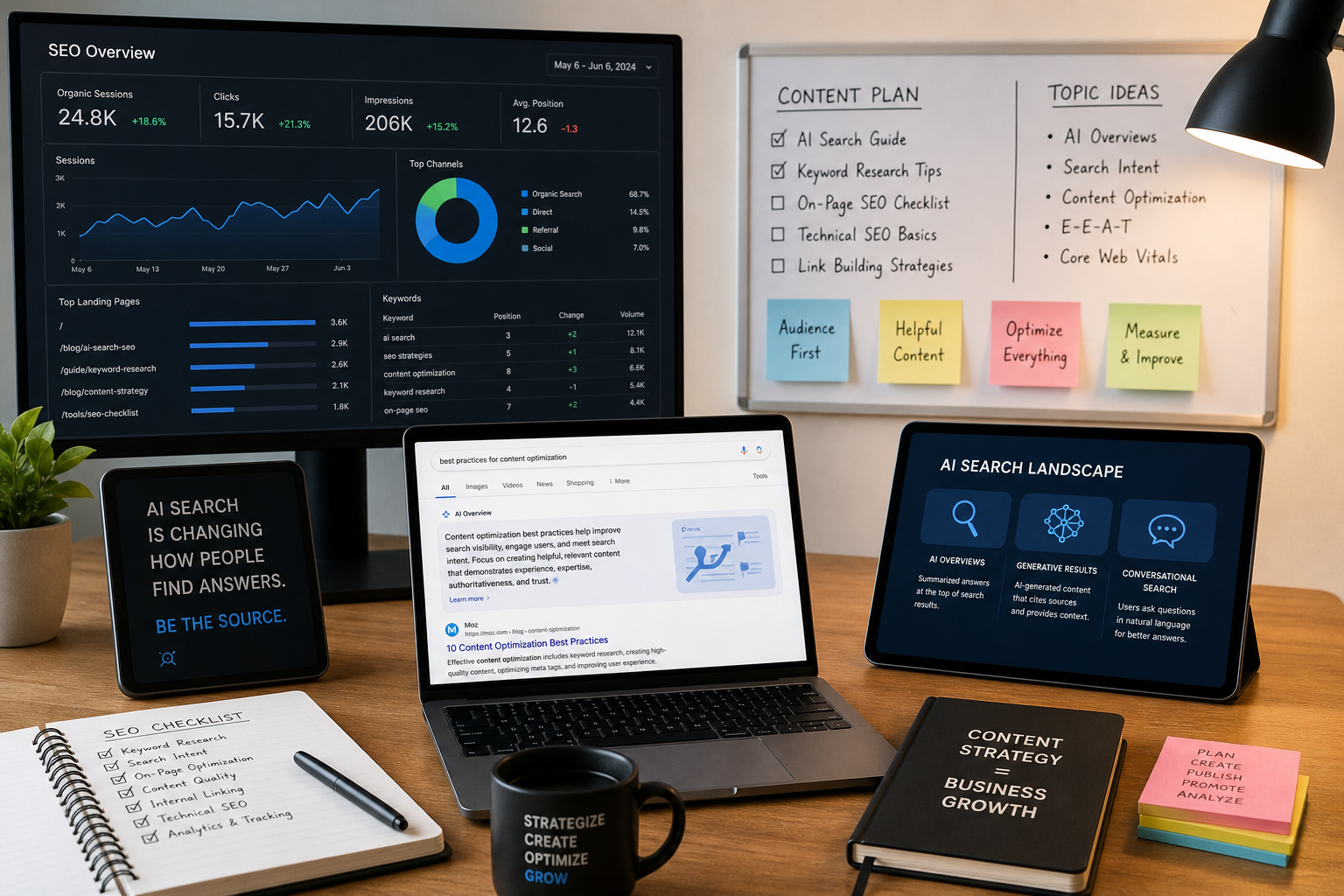
For businesses, this means SEO can no longer sit apart from content, branding, user experience, and conversion strategy. The goal is not only to rank for keywords, but to become the most useful, trusted, and easy-to-understand option for your audience. A strong SEO marketing plan in 2026 combines technical clarity, helpful content, real expertise, and consistent improvement.
Search Is Becoming More Intent-Driven
In 2026, successful SEO begins with understanding intent. Keywords still matter, but they are only the surface layer of what a person wants. Someone searching for SEO tools, for example, may be looking for a comparison, a free option, an agency solution, or a beginner guide. If your page does not match that intent, ranking becomes harder and conversions are unlikely.
Modern search systems are better at connecting related concepts, context, and user expectations. This makes topic coverage more important than repeating the same phrase throughout a page. A strong page should answer the main question, address related concerns, and guide the reader toward a logical next step. It should be clear who the content is for and what problem it helps solve.
Marketers should map content around the full customer journey. Early-stage visitors may need educational articles, while decision-stage visitors may need service pages, comparisons, case examples, pricing guidance, or frequently asked questions. When your website supports each stage, SEO becomes a growth channel rather than a collection of isolated blog posts.
Content Quality Means Proof, Perspective, and Structure
Generic content is easier than ever to produce, which makes original value more important. In 2026, quality content should demonstrate experience, not just summarize common information. This can include practical examples, expert observations, product knowledge, process explanations, original visuals, or lessons learned from serving real customers.
Good SEO content is also well structured. Readers should quickly understand what the page covers, why it matters, and what to do next. Clear headings, focused paragraphs, descriptive page titles, and concise introductions help both users and search engines. Avoid writing long pages simply to reach a word count. A complete answer is better than a bloated one.
Brand voice also matters. If many websites answer the same question, your perspective can help separate your content from the rest. Explain how your business approaches the topic, what mistakes to avoid, and what trade-offs readers should consider. This makes the content more useful and can increase trust with potential customers.
Refreshing existing content is just as important as publishing new articles. Outdated pages can lose relevance if they reference old tools, old processes, or incomplete advice. A regular content audit helps you improve pages that already have potential, remove content that no longer serves a purpose, and identify gaps your audience still needs answered.
Technical SEO and User Experience Are Now Core Marketing Work
Technical SEO remains essential because even excellent content can struggle if a site is slow, confusing, or difficult for search engines to crawl. In 2026, marketers should pay attention to site speed, mobile usability, clean navigation, internal linking, indexability, structured data where appropriate, and secure browsing. These elements support visibility and create a better experience for visitors.
User experience and SEO are closely connected. If a visitor lands on a page and cannot find the answer, read comfortably on mobile, or understand the next step, the page is not doing its job. Strong SEO pages should be easy to scan, fast to load, and aligned with the promise made in the title and meta description.
Internal linking is one of the most overlooked SEO marketing tools. Helpful links guide readers from an educational article to a related service, product, guide, or contact page. They also help search engines understand which pages are important and how topics on your site connect. A well-planned internal linking structure can improve both discoverability and conversions.
Local and brand signals also deserve attention. Accurate business information, strong service pages, customer reviews, and consistent brand mentions can support search visibility, especially for businesses that serve specific regions or markets. SEO is strongest when your website, profiles, and reputation all tell a consistent story.
A Practical SEO Marketing Plan for 2026
A practical SEO plan for 2026 should start with business goals. Instead of asking only what keywords can we rank for, ask which searches can bring the right customers. Focus on topics connected to your offers, audience needs, and competitive advantages. This keeps your strategy tied to revenue and lead quality rather than vanity traffic.
Next, build a content framework. Choose core topics, create strong pillar pages, and support them with useful articles that answer specific questions. Each page should have a clear purpose, a target audience, and a next step. For example, an educational blog post might lead to a guide, consultation, product page, or newsletter signup.
Measure performance with a balanced view. Rankings are useful, but they are not the only indicator of success. Track organic traffic, engagement, conversions, assisted conversions, indexed pages, content updates, and technical health. Look for patterns over time rather than reacting to every short-term change.
Finally, treat SEO as an ongoing marketing system. Search behavior, competitors, and technology will continue to evolve. The businesses that perform best will be the ones that keep improving their content, clarify their expertise, maintain a healthy website, and focus on helping real people make better decisions. In 2026, sustainable SEO is not about gaming the algorithm. It is about becoming genuinely easier to find, easier to trust, and easier to choose.